Translate

Thursday, June 6, 2019

Duolingo - You can have it your way


How can I best learn a new language?  Oh, if I only knew the answer to that seemingly innocuous question.  Lots of us want to learn another language, but few of us succeed.   My best advice is to give DuoLingo a try.  DuoLingo is a web-based language learning program available for desktops, laptops, and mobile devices.  Two of the pluses of DuoLingo are that it has a perfectly acceptable free version and that you can tailor it to your own needs.  Is it the panacea for all language learning problems?  No, sorry.  But I have been using it for about six years and still look forward to using it on a daily basis. Here is the advice I would give a friend who wants to acquire another language using DuoLingo.


First, choose a language that is meaningful to your life. DuoLingo offers a wide variety of languages.You may be planning a trip to a foreign country, have friends who speak another language,, enjoy the music from a certain country, want to connect with your roots, or learn about a new culture.  I study Spanish and Portuguese because I have taught those subjects, French because I have French-speaking Canadian friends and enjoy traveling in Canada, Italian because a good friend has just bought a flat in Venice, and Irish and Welsh because I am intrigued by Celtic cultures.  And if you find that you chose the wrong one, you can quit it and start a new one.  I once began Catalan and  Romanian because they are Romance languages, but I quickly lost interest, probably because I didn't have a personal connection.


Next, set a daily goal ( a small one is fine) or let DuoLingo set one for you.  The program can be instructed to send you reminders if you don't meet your daily goal. I used them at first to develop the habit of doing some bit of language every day, but after a while, the reminders began to feel like a nag.  Now my strategy is to gain ten points every day, which is really easy.  I have a streak going of over 1800 days.  You may laugh, but I go to great lengths to maintain my DuoLingo streak.  However, in addition, my personal daily goal is to do one exercise in six different languages every day without making five errors.  Duolingo lets me know when I make an error by losing one of my five available hearts. So, my advice is to play around with your goal so that it fits your lifestyle.


Now to the content that DuoLingo offers.  You will choose topics to work on, some based on life experiences, like travel, and others based on grammar, like past progressive verbs.  Once again, you are in charge here.  The topics are arranged from easier to more advanced, but you don't have to necessarily work through them in a lock step fashion.  Remember, language learning can be a truly enjoyable experience. Language Acquisition experts talk about the important role of Language Input, that is, getting lots of language into your head in a comprehensible way. Duolingo offers an impressive amount of content.


Another piece of advice is to allow yourself to explore what DuoLingo offers.  There is no one right way to use it.  DuoLingo is constantly changing,  so you may log in one day and find new features.  I can compare it to learning how to use an iPhone or an Apple Watch.  You will discover capabilities you want to use and others of no interest.  On Duolingo, I have explored grammar explanations (pretty boring), jump ahead quizzes (great), vocabulary count (not useful), online discussions (pretty interesting if you have time), and adding friends to compete with (not so interesting anymore).  Just keep clicking around in the program until you find features that suit you.

Now back to the thorny question of how to learn a language.  I can only say that DuoLingo will help you along in your journey.  The program gives me an opportunity to maintain Spanish and Portuguese, helps me feel that I am not losing the French I learned in school, gives me hope that the next time I am in Italy I can use more Italian than the last time, and provides an intellectual challenge figuring out the workings of Irish and Welsh.   


My plea to Duolingo is: Please bring back the 'bots'.   The bots carried on a conversation with you to which you replied speaking or in writing.  Talking to the bots was very close to having a conversation with a real person, which means that you were creating language in your own head.  I loved talking to them.   But the bots unfortunately only made a brief appearance in the program.

Is DuoLingo the ultimate answer to the question, "How do I best learn a language?" No, but it is a flexible, motivating way to study language. And I look forward to a future where language learning is even more accessible. 

 If you are a DuoLingo user or want to be, I look forward to reading your comments and observations on language learning!


Saturday, March 23, 2019

What's with that t sound in Beto?


Finally, my home town of El Paso, Texas is getting some positive attention, thanks to Beto O'Rourke. 


Beto, an El Paso native, announced that he is running for the Democratic nomination for US President in 2020. Now people I meet have something to chat about when I say I am an El Paso native.  "Oh, yes, Beto is from El Paso too, right?" 

It's almost amusing how the name "Beto" rolls off the tongue and is easy to remember. His name is not a campaign trick. "Beto" is a common Spanish nickname for anyone named "Roberto."  Pat O'Rourke gave that nickname to his son, Robert, when he was young.  (It is not at all unusual in a bilingual border city like El Paso to have Spanish names and nicknames.)

As I began hearing Beto's name said by a variety of acquaintances and the national media, I noticed that often the pronunciation sounded just slightly off. I learned Spanish as a second language and hear Spanish spoken on a daily basis in El Paso. One important way to avoid having the much maligned "American accent" is to pronounce the "t" differently in Spanish than we do in English.  What a great excuse Beto's name is for a brief investigation into the linguistic fields of phonetics and phonology!


At first I thought the strange pronunciation of Beto was caused by the fact that the usual Spanish t is pronounced with the teeth touching the top teeth, which creates a softer sound than the English t, in which the tongue touches the roof of the mouth to make a more explosive sound. Say the word "top" in English and put your hand in front of your mouth.  You should feel a slight puff of air from the t.  But the answer did not lie in the t sound, because what I was hearing was something more like "Bedo."  

Further investigation cleared up the issue.  An American English speaker pronounces a t sound between vowels as a sort of d sound. (Linguists identify it as a "flap" in which the tongue touches the roof of the mouth quickly.)  Think about the pronunciation of the t in the word "water."  It is more like a d than a t, isn't it?  Try the word "data."  The t in the middle sounds like a soft d.

So, mystery solved!  An English speaker looking at the name "Beto" naturally pronounces the name as it would sound in English.  Hence, "Bedo."

I'm sure more weighty issues will come to the forefront as the race to the presidency continues, but for now I am pleased to have Beto (or Bedo) O'Rourke as a publicity maker for my home town.  


Tuesday, January 29, 2019

Are you a victim of Language Attrition?


The term "Language Attrition" has a fairly unpleasant ring to it, doesn't it?   I hesitate to admit it, but falling victim to Language Attrition has risen to the top of my personal worry list.

Attrition is defined as the wearing away of something.  Language Attrition is the term linguists use to describe a natural decline in a person's language skills due to insufficient use or environmental changes. (In other words, "Why is it that I used to carry on a conversation in Spanish but now find myself groping for words?")  I'm not concerned with losing my first language, English, because I use both the oral and written forms all day, every day. But I am becoming very concerned about the loss of Foreign Language skills.

An inordinate part of my life has been devoted to learning Foreign Languages.  Through the years, I have taken countless language courses, completed college degrees in languages, and taught languages and linguistics. I would have thought that given the amount of time and energy I have devoted to Spanish and Portuguese that at least those two languages would have a permanent place in my brain. Surely the languages I have been most intimately connected with are not beginning to recede in my memory! But I fear they are.

The first hint of trouble appeared as I was doing a daily round of exercises recently on Duolingo, my favorite free, online language learning program.   I have worked on Duolingo with at least one of six languages every day for over 1700 consecutive days. On some busy days, I have completed just a Spanish exercise.  On others, I have plowed through Spanish, Portuguese, French, Spanish, Welsh and Irish. I typically do Spanish and Portuguese back to back to avoid mixing the two Romance languages.

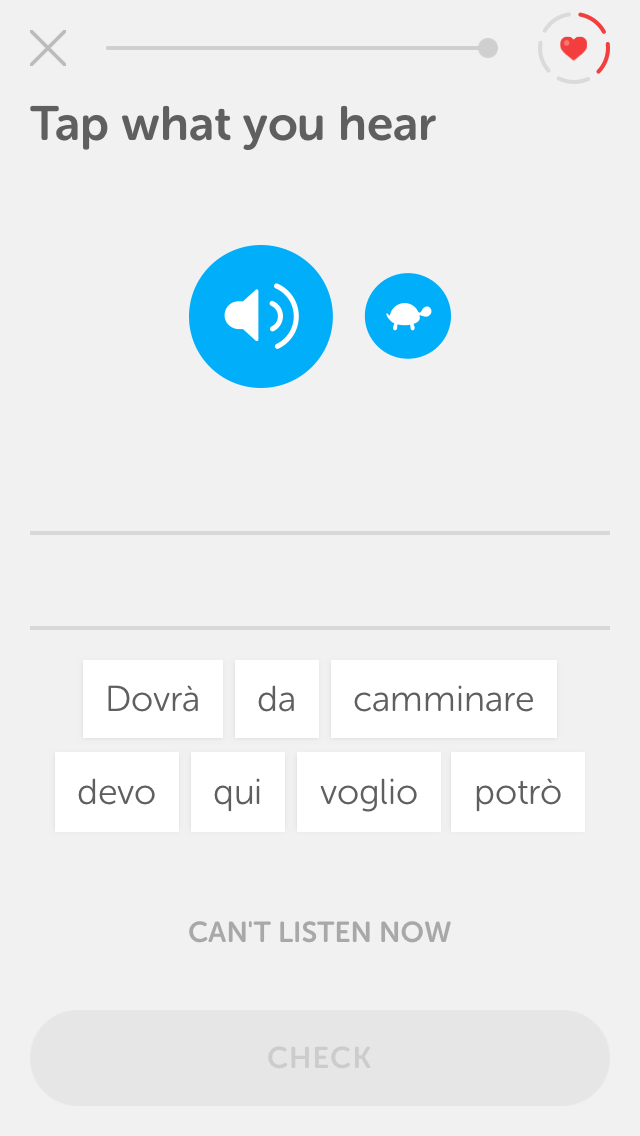
When you get the right answer on Duolingo, you receive a pleasant sound as a reward.  When you make an error, the correct answer appears in a red box at the bottom of the screen, and, depending on which version of the program you are using, you lose a segment of the much dreaded "health meter." (Loss of too many health segments potentially stops your progress for a period of time.)


I noticed that I was making more and more errors in Spanish and Portuguese.  And the errors weren't with big issues, like obscure vocabulary items or intricate grammar points.  The mistakes appeared with commonly used words and concepts.

Who would have thought I could mix up the Spanish and Portuguese words for "the"?  Spanish uses "el" or "la" for singular "the" and Portuguese uses "o" and "a" for the same concept. How could I forget that the Spanish word for "bus" is autobús but ônibus in Portuguese?  How often did I have to remind students that the "they" form in Spanish ends in "n" (ellos beben) but in "m" in Portuguese (eles bebem)?  I feel Language Attrition setting in.

I can recommend to myself many paths for maintaining languages to keep attrition at bay.  Unfortunately, I no longer lead a life style that allows frequent practice with native speakers of other languages. (Granted that living on the border with Mexico in El Paso, Texas gives me some contact with Spanish, but we are in truth a bilingual city.) Of course, videos, movies, radio, music, newspapers, and novels could fill the void if I would just make time to use them. 

I'm not sure I like the conclusion I have arrived at in writing this post about Language Attrition.  Counteracting it is going to take much effort on my part, along with losing weight, exercising, practicing the baroque recorder and guitar, not to mention decluttering the house.  

But instead of whining about being one of the many victims of the disappointing phenomenon known as Language Attrition, I'm going to begin reading a Graham Greene novel translated into Spanish, Nuestro Hombre en La Habana (Our Man in Havana). It's one small step, but at least I feel like I am doing something.  Now on to those other life challenges!    


Sunday, November 4, 2018

Does Speaking a Language merit the Gold Medal?


"I'm studying French."  "Really?  Can you speak it?" Most people think that knowing a language means speaking the language. But is speaking a language truly the only worthy goal of language study?

No one, least of all me, can deny the thrill of successful conversation in another language with a native speaker.


I can still remember a few of those exchanges in my past and the satisfaction they brought me. For example, the customs inspector as I was leaving Brazil after six weeks of language immersion told me I spoke Portuguese "bastante bem" (quite well).  A fellow party-goer in Mexico City where I was studying Spanish didn't realize at first that I was American.  And, even in my home town on the border, El Paso, Texas,  I still get a kick out of rare times when I am speaking in Spanish to a native Spanish speaker who doesn't  immediately switch to English. 

Recently, however, I have been taking a more practical approach to language study, which I do mostly on Duolingo.


Duolingo is a language learning program, available in a wide variety of languages on the Internet in web based and mobile platforms at no cost.  It isn't perfect, but it is the best program I have found to date for doing a bit of language study faithfully every day.

My thirty-minute morning goal is to successfully complete one exercise in six languages.  I study Spanish and Portuguese in order to maintain speaking proficiency because those languages were my teaching fields.  I also study French, Italian, Irish, and Welsh in order to ...what?  Will I have the opportunity to use those languages in conversation?  Much as I like to dream of extended vacations to Canada, Italy, Ireland and Wales, happily conversing with natives of those countries, let's get real here!  And I know of no French, Italian, Irish or Welsh speakers in my hometown of El Paso, Texas, who want to meet up for coffee and conversation. 

Unfortunately, Duolingo does not at present provide enough opportunities for creative language use, although a promising feature was available for a short time in the past. With that feature, you could communicate orally with a "bot,"  which came very close to a real-life situation, because you truly had to create language.


 I have hopes that Duolingo will continue to introduce innovations for the speaking skill.  

In the meantime, though, I must be content with learning ABOUT some languages rather than learning to SPEAK them.  And is that worth my time and effort?  Yes, and here's why I think so.   

* I enjoy the mental gymnastics of language learning (a term coined by the linguist, Stephen Krashen).  Surely the effort it takes to analyze another language qualifies as one of the methods of keeping the brain active.

* I feel a connection to the countries and speakers whose language I can at least read, which makes international news a lot more interesting.

* I believe that analyzing the various ways in which other languages express meaning makes me more in tune to how speakers use English, my native language. Random overheard conversations, radio, TV and signs are all fodder for thinking about language in general.

* I think about language study as an enjoyable daily activity, something I can use to reward myself for completing household duties.

So, is speaking a language awarded the gold medal for language study?  Yes, it is.  But  I will be very content with the silver and the bronze medals for reading, writing, and understanding the structure of many other languages.


Monday, October 1, 2018

Taming the Language Monitor

A chance conversation with an acquaintance reminded me of one of the most important concepts in foreign language learning — the role of the (subconscious) Language Monitor.  


I think of the Monitor as a tiny strict language teacher sitting on my shoulder when I speak another language, constantly checking what I say to make sure it conforms to grammar rules.

What's wrong with that you may say?  "I would love for someone to make sure I am speaking a language correctly." Here's what's wrong.

The acquaintance asked if I spoke a lot of Italian on a recent trip abroad.  "Not much," I complained., "I could read lots of the language but when it came to speaking....." 

 "What has happened with my Spanish," the acquaintance confessed, "is that I have been studying for two years, and I know so much grammar that it is slowing down my speaking ability.  I used to speak Spanish fairly fluently," she added, "but now my mind is checking everything that comes out of my mouth."  

How about it, reader, have you had a similar language learning experience? Do you have an overactive Language Monitor in your brain holding you back?

A first step in taming the Language Monitor is accepting the that fact that language errors must be viewed as helpful rather than disastrous. 


I know.  No one likes to make mistakes in life. But the idea that you are always going to speak perfectly is not even logical, even in our native language.  We expect babies learning their first language to make constant language "errors."  So will we as adults make many errors as we learn a new language, and it will be a good thing. Our minds will begin formulating our own subconscious idea of how the new language works (its grammar).   

Given the fact that language errors are inevitable in speaking a new language, why not let the Language Monitor clean things up before you speak?  Sounds logical.  But the reality is that specific conditions must exist for the Monitor to do its job. 

-The speaker must know the rule well in order to apply it. Remembering all of the written rules of a language is a difficult task, and many rules remain unwritten and not available for learning.

-The speaker must be focused on form rather than meaning.  (Have you ever made a conversational partner wait until you conjugated a verb in your mind to get the right form?  I have.)

-The speaker must have time to apply the rule.  I am picturing an impatient listener who just wants to get on with the conversation rather than waiting for you to stumble around trying to express yourself in error-free language.

So how about loosening up a little and patting yourself on the back for communicating successfully rather than formulating a perfect sentence?  Did you succeed in getting directions to the train station in Paris?  Were you able to ask for the check and pay with a credit card in Mexico City?  How was your chat on the Via Rail train in Canada with German-speaking dinner companions?

Tell your Language Monitor to cool it until you are writing an email to a new Portuguese-speaking friend whom you would like to impress with your perfect language.  Then you may use your Language Monitor that has been waiting in the wings, red pen in hand so to speak.


Monday, August 27, 2018

Beating a Language Study Slump

Most of my posts to this Language Lover's Blog are filled with enthusiasm about studying other languages. I have published 155 posts over the past five years extolling the virtues of foreign language acquisition.  I promised readers they would fall in love with languages, develop a lifelong fascinating hobby, and perhaps even ward off dementia for a few years.  

Now I find myself in the embarrassing position of not being excited about languages anymore. Yes, I have said it.  Just like my favorite major league baseball team, the Los Angeles Dodgers, I am in a slump.


 And just like the hitters who can't connect with the ball like they used to or the pitchers who can no longer throw strikes, I can't put my finger on what the problem is or how to solve it. I wish I had Yogi Berra's philosophy.


The problem of maintaining motivation looms large in the field of foreign language acquisition. You may have experienced it yourself.  As you start to learn a new language, you are on an uphill trajectory.  You promise yourself to study every day, sign up for a course, use online apps, and plan a trip to use your new language.  Ah, I remember those innocent days! Reality soon makes hash of your good intentions, and to paraphrase Yogi Berra, you aren't in a slump, you just aren't acquiring the language of your choice.

Take my desire to learn Italian, for example.  With plans for a summer trip to Tuscany with friends and family, I felt fairly confident that I could learn a lot of Italian before the trip.  After all, I have degrees in foreign languages, I have taught foreign languages, and Italian is a Romance language similar to Spanish and Portuguese, which I know fairly well.  What could go wrong?

I signed up for a six-week Italian class at an institute on a local university campus.  The details are irrelevant, but suffice it to say that the only thing I learned about Italian was that "ci,","ce," "gi," and "ge" were going to give me lots of trouble.  I did not sign up for the second six weeks.

My next effort was to sign up for Italian on Duolingo, a popular online language learning course, available on the web or as an app on mobile devices.  I had been using Duolingo for several years to study a variety of other languages and thought it was great fun.  About this time, though, Duolingo made a significant change in the program.  In the old version, you were allowed to make mistakes and keep trying to answer correctly with no penalty.  It was a relaxing way to learn.

The new version of Duolingo allows only a certain numbers of errors before your "health meter" runs out of segments.


Note health meter in top right hand corner


Unless you can buy back your "health," you have to wait more than four hours to regain it and continue practicing.  Needless to say, I found nothing motivational about the new rules.

Another change in Duolingo that I missed was the absence of "bots."  At one time, you could hold an actual conversation with a bot by typing or saying your answer.  I loved talking to the bots and learned a lot about conversational language in Spanish, Portuguese and French.  Sadly, though, I did not have this opportunity in Italian.

You probably know where all of this complaining is going.  We had a great trip to Italy, but I spoke virtually no Italian and understood less.  I found myself gesturing and pointing like a first year language student to even order a gelato.  

What do baseball players do when they hit a slump?  They keep on swinging and pitching.  I'll keep studying languages on Duolingo because I have a 1561 day streak going, and I hate to be a quitter.  Maybe, just maybe,  the thrill of language learning will return to me one of these days.


Saturday, July 28, 2018

Oh those pesky Italian "c's" and "g's"

After a summer vacation in Tuscany, now back home in El Paso, Texas, I wonder what memories will stay with me? First would be the Italian landscapes that are even more praiseworthy than their depictions in travel books.


View from our villa, Le Due Volpe

The Italian people are friendly and helpful.  And they appear to truly enjoy life, something I forget to do from time to time.

Charming Italian guide leading wine tasting

But my first steps attempting to communicate in the Italian language may be my most long-lasting memory.  A note of caution:  if anyone tells you that everyone in Italy speaks English, do not believe them.  We did find a few people in the hospitality field who very kindly spoke English to us, but for the most part, our communication was done using sign language.  Two notable exceptions were our hosts at the villa, Cinzia and Aldo, who were always ready for a chat in English. In addition, I had  been assured before leaving the U.S. that I could get by in Italy using Spanish.  Wrong, again.  I'm sure there are Italians who speak Spanish, but I failed to locate them.

I had been studying Italian using DuoLingo, my favorite online free language learning program, for about six months in preparation for our Italian adventure. I was encouraged because I could read in Italian fairly well because it is similar to Spanish in its written form.  And the grammar wasn't too daunting.

But, oh the pronunciation of those Italian "c's" and "g's" proved to be the death of me!  I even wrote a blog post, "Just enough Italian pronunciation," several months prior to the trip pointing out rules for changes in "c's" and "g's'  before "i's" and "e's."  I soon discovered that knowing the rule is not the same as being able to apply the rule. (How many times have I preached that to my former language students?) As other travel memories fade, what I may remember about Italy is being gently corrected by smiling Italians when I continually mispronounced  "c's" and "g's."

My first language lesson was in Tirano, Italy, where we stayed several nights after riding the Bernina Express train through the Swiss Alps. The bright red cherries at an outdoor fruit stand looked luscious.  Unfortunately, the Italian word for cherries is ciliegie. The "c" before the "i" makes a "ch" sound.  Everyone knows how to say ciao, right?


And the "g" before the "i" makes a sound like the first and last sounds in "judge."  Now try putting those two rules to work on a busy Italian street with a vendor waiting for you to make a purchasing decision.  He patiently corrected my pronunciation and put the cherries on the scale.

My next Italian language lesson came during a lunch meal at a restaurant in Borgo San Lorenzo. I had been missing an iced drink in the hot, humid Italian weather, so I was inspired to order a soda with ice.  The Italian word for ice is "ghiaccio."  Oh no, more "c's and "g's"!  This time the "g" was followed by an "h" which changed its pronunciation back to a hard "g" (like "go").  And the "ci" still kept the "ch" sound, but not before you pronounced another hard "c" (like "cat") before it.  The waiter gave me a big grin and pronounced "ghiaccio" three times until I got it right.  Mamma mia!


Can you see the ice and lemon in my coke?


At least I got some occasional comic relief in the language category.  The same waiter described above was naming meats offered on the luncheon menu and proudly announced that they had "cinghiale"  (wild boar meat).That word in Italian, correctly pronounced, sounds very close to a Spanish curse word (always good for a snicker).  My husband, Wayne, and I exchanged startled looks.

Italy was an unforgettable experience—one of our best trips we have decided.  But my goals before I visit Italy again are to conquer the elusive sound variations of "c"and "g" and to learn to ask correctly and politely for ice in my drink and maybe even a vegetarian menu!


Saturday, June 16, 2018

DuoLingo Wants to Crown You

One morning not long ago, I logged onto my DuoLingo language learning program and discovered a new feature — a gold crown attached to each of the topics.


DuoLingo is my favorite free online language learning program.  I must enjoy it because I have been using it on a daily basis since 2014.  I began by studying the Spanish language and soon added five other languages.

DuoLingo often adds new features which the user needs to experiment with to understand.  The first thing I noticed was that the crown levels add a surprising amount of new material  (five more levels) to each topic. For me in Spanish, this feature was welcome because I had long ago completed the "tree" which contains all of the possible vocabulary and grammar topics. A new challenge was just what I needed to add complexity to my Spanish study.

So I jumped right in with my iPhone and started a crown level.  A new circular counter with five segments appeared in the upper right-hand corner of the screen.  What was that I wondered?  I soon found out. Every time I made an error of any kind, a segment of the counter disappeared.


Only two segments left!

And when all the segments were gone?  I had "lost"and was not allowed to continue with the program until I regained my "health." 


Out of health!


My options were:  (1) Spend 450 of the gems I had collected on the program to refill. (2) Purchase gems for cold hard cash from the program to refill. (3) Wait about five hours for my health to be automatically refilled. (4)  Trudge up the stairs to my laptop and do a few easy lessons to refill the counter. (The web version doesn't have crowns or counters.) (5) Buy DuoLingo Plus for a monthly fee.  

None of these options would help me progress in my language study.  As a business model for DuoLingo, I can understand what the program wants the user to do.  But from the viewpoint of a language learner, cutting off my language learning is not at all helpful.


One of the big controversies in language instruction is whether error correction helps or hinders a learner.


On the DuoLingo web version, a line appearing at the top of the screen advances or retreats depending on whether you give a right or wrong answer; however, you are allowed unlimited access with no penalties.  The web system is a gentler form of error correction.  The new mobile crown system is much more punitive.  Imagine if I were to make a language error speaking in real life and be barred from further conversation unless I paid a ransom or waited several hours! That just isn't realistic.

DuoLingo is the best language learning platform that I have found.  It is accessible, motivating, and innovative.  The stated mission of the program is free language education for the world.  I love it and use it every day.

But that darn health meter really bugs me and gets in the way of my language progress.  I wish I could log onto DuoLingo one day in the future and find that those intimidating counters were just another failed experiment.


Tuesday, May 22, 2018

DuoLingo Has Something for Everyone


Most people I chat with these days about language study mention they are using DuoLingo, a free,  popular internet program. I am a devotee of DuoLingo and have been using it every day for over four years (I have a 1465 day streak going—obsessive, right?)  I study four Romance languages and two Celtic languages.  DuoLingo offers an impressive array of languages and frequently adds new languages.. You can do Duolingo on a computer or a mobile device.

If you haven't been introduced to DuoLingo yet, let me try to summarize it. Warning: the program is addictive.  You are presented with a series of exercises in the language of your choice based on vocabulary and grammar topics, such as "to be" or "business."


Each exercise has approximately ten parts which may be listening, speaking, reading or writing activities. Answers can be submitted by keyboard or voice. If you complete an exercise successfully, you hear a pleasant computer sound and are awarded 10 or more experience points (XP's). That is the heart of the program. But DuoLingo consists of more optional features to personalize the language learning experience.  Which types of personality might use the various features, I wondered?

Language Geeks


As I began to use DuoLingo, I was both surprised and heartened to learn how many language geeks besides myself are out in the world.  For example, in the web version, after submitting each answer, DuoLingo gives you the option of discussing it with other users.  Who would have predicted that there would be so many passionate and complex exchanges about grammar and vocabulary? An example from DuoLingo Spanish, one of 103 entries about translating "We drink milk," is "Can someone help me understand the difference between bebe, bebes, bemos (sic) and bebemos?" 


Another feature that language geeks may enjoy is clicking the "report" button if they disagree with the correct answer.  I have done that myself a few times and have even received a reply back from DuoLingo saying that my answer would now be accepted.  Ah, the joy of righting a wrong in the world!

A "share" version on the mobile version allows users the option of sending an answer to someone or some place.  I just discovered one possibility, "Add to Notes," that may work for recording something I want to ponder at my leisure.

Finally, language geeks may be intrigued by the offerings of two invented languages,  Klingon and High Valyrian, recent additions to DuoLingo.


Old School Users


If your first experience studying another language was in a grade or high school classroom, as mine was, you may be searching for DuoLingo features that look and feel familiar.  Both the web and mobile versions have buttons to click to read short grammar explanations. You click on the light bulb in the web version to learn more about the topic.


You can also take a teacher role by clicking on the "Review" button after each exercise and comparing your erroneous answers to the correct ones.

As students, we are comfortable with ability levels (remember Blue Bird and Red Bird groups in kinder?).  DuoLingo allows users to progress through levels, with material becoming increasing challenging.  Recently DuoLingo introduced "crown" levels which give users even more challenge and practice (sort of like additional pages in a workbook). 


The good news is that the web version makes the crown levels easier to achieve because the consequences of wrong answers are not as dire as on the mobile version.  (This is a controversial topic for another day.)


Another feature that old school users may recognize is found under "Labs" on the web version.  I recently clicked on several of the interactive Spanish stories and found the experience familiar and enjoyable. 

Social Butterflies

As an introvert, I may not be the best person to comment on social opportunities on DuoLingo, but I do realize that connecting to other language learners is important.  The web version of  DuoLingo has an active discussion board where I have received good advice from time to time, usually about how to use a new DuoLingo feature. And be advised that DuoLingo does throw new features at you without warning for which you may need a little help from your online friends.

Another social media type feature of DuoLingo on the mobile version is an icon called "Clubs."  I haven't explored it fully, but at first glance it looks like a sort of Facebook for DuoLingo users.

Another less demanding social aspect of DuoLingo is following other users and having them follow you.  You can check your Leader Board to see how the amount of experience points you achieve compares to people that you follow. And be advised that there is always someone out there who is ahead of you. 


I try to imagine some of these leaders who are way out front.  Do they have a life?

No matter what your age, personality, language background or skill with technology, I believe that if you have an interest in other languages for whatever purpose that you can find what you want on DuoLingo to personalize the language learning experience.  And remember, DuoLingo is free and may become your favorite healthy habit.


Saturday, April 28, 2018

More New Words for Old Ideas

Last January I published a blog post about new words that are being used to express old meanings.  That post received a high number of hits, so for the last several months, I have been on the lookout for more signs of creativity in language.  My husband, Wayne, who has a keen ear for colorful language, is in on the game. 

Recently Wayne returned from an annual meeting of the American Chuck Wagon Association, held in Fredericksburg, Texas.  He shared with me that he received an unusual compliment for his biscuits served from a chuck wagon.  (Not that a compliment was unusual, but the words used were!)  Someone told him, "Your biscuits are the bomb." 


Wayne was taken aback for a few moments until he realized that his biscuits had just received a rating of awesome, phenomenal, the best. Because the word "bomb" is usually associated with unpleasant events, using it with the opposite meaning makes it stand out.  I am reminded of how the word "bad" has taken on the meaning of "very good" in recent years.  


Newspaper comics are a constant source of innovative language use.  One of my favorite cartoon characters is the teenage boy, Jeremy,  in "Zits". 


Jeremy shows his friend, Pierce, a pop-up ad about himself advertising that he is, among other things, a "totally woke dude."   "Woke" has taken on a non-literal meaning of being socially aware, knowing what's happening.  The new use originated in African American Vernacular English and was first used by teenagers in Internet slang.  We older folks might say someone is really "with it."  (Oh, how our use of slang terms dates us!) 

Another source of creative language terms is National Public Radio (NPR).  If NPR uses a term, I feel confident that the term has reached a mainstream audience.  "Thirst Trap" is one such expression.  As I understand it, it is a message that seeks to get attention, such as a provocative picture or a flirtatious message on social media.  Another term is "Cringe Factor,"  which is self-explanatory:  something that provokes a negative physical response, such as flinching. 


I need help from readers on the next term.  Several times while watching detective shows, I have heard the main inspector inquiring of colleagues something like, "What's the joy on the new case?"  Am I hearing that correctly?  Is "joy" being used for "new information"?  

The next example of descriptive language use comes from one of my husband's friends.  A group of men were discussing issues in their chuck wagon organization, specifically newcomers who had little knowledge but wanted rapid change.  One group member described them as "attacking with a rubber tomahawk perspective."     Isn't it amazing what we humans can create with language?

Often we resist language change, claiming that new words and expressions are a sign of moral and intellectual decay. We humans do hate any kind of change in our lives, don't we? But I would like to make the case that language change is a natural phenomenon, but we do have the power of decision over our own language use.  I for one find language innovation fascinating.  I may not choose to use all of the new language that I hear if it doesn't fit my personality or life style, but, yes, it does bring a big smile to my face.  

Thursday, March 15, 2018

Dealing with Language Anxiety

This summer will find me on my first trip to Italy.  Plans are to travel around Northern Italy by local train for a week and then meet up with friends and family at a villa in Tuscany.


Italian Villa - Le Due Volpi


Sounds like a dream vacation, doesn't it?  Then what is the source of this anxiety I feel when I visualize the trip?  It may be language anxiety rearing its ugly head.

My husband, Wayne, reminded me recently that this is the only trip we have taken for which we have zero ability in the native language.  Our previous travels have been to countries where English, French, Spanish or Portuguese are spoken.  English is my native language (although I must admit that in Scotland, one of our favorite travel locations, communication was sketchy, at best!)  

I know enough of the other three languages to survive in Canada, Spain, or Portugal.  But my 
halfhearted attempts to learn Italian through the years have not resulted in even minimal  communicative ability.  And, to make matters worse, since I am the language nerd of the family, I am expected to know some Italian.  No pressure there!

Should I cop out and speak Spanish to the Italians, hoping there is enough similarity in the two languages to communicate?  Some of my Spanish-speaking friends have suggested this solution because it worked for them.  But a nagging voice inside tells me to use this trip as an opportunity to learn some Italian. I suppose it is time to get serious about this Italian study.

Italian is already one of the languages I study on a daily basis on Duolingo, my favorite free online language learning course. I work on Italian exercises about ten minutes daily, which has lulled me into thinking that Italian isn't that hard if one knows other Romance languages. 


Duolingo, Italian


You (plural) eat the bread, right?  The problem is that I have a passive understanding of Italian, which means I can read this sentence or maybe even understand it when spoken  But what if I find myself in a situation where I have to create the same sentence? 


Restaurant in Florence, Italy


 (The Florence restaurant is candlelit with violins playing "O Solo Mio" softly in the background.The waiter brings a basket of freshly-baked bread to the table.  I turn to my dinner companions and say magnanimously, "Voi mangiate il pane," remembering that I want to save room for the gelato on the dessert menu.)  

Even though I plan to continue with Duolingo to build up Italian vocabulary and grammar skills, I need an additional method to force me to think in the language, that is, to turn thoughts into language.  The method I have chosen will sound familiar to you—flash cards. 

I must admit that flash cards had never appealed to me before because they seemed to be all about rote learning and memory.  My Italian flash cards, however, will be personalized flash cards and used in a slightly different way.  As I do each Duolingo Italian lesson and come upon a useful word or phrase, I write it in English on one side of a small card and Italian on the reverse side. Choosing and writing the Italian words for myself has the added bonus of helping me focus.  

One of my first flash cards says, "The newspaper"  "I read a newspaper" "I have a newspaper."  Once I have confirmed that I am saying the correct words, I begin to practice conversations in which I use the phrases.  I continue the imaginary conversation as long as I can express myself and expand it if possible, sometimes researching other vocabulary and grammar that I need.  What is the plural form of newspaper?  How do you say, "Do you read?"  or "Do you have?"  Or, "How much is the newspaper?"  My Italian dictionary and Google Translate app are always close at hand.


Italian newspapers


An added benefit of flash cards is their portability.  I can carry a stack in my purse to practice Italian in waiting rooms or on long car trips.  And flash cards don't need power or a cellular connection. 

So if you have language anxiety (and most of us do), how about inventing a new way to continue learning that language, one that works for you personally and, above all, is something you look forward to doing on a regular basis?  


Sunday, February 25, 2018

Language Proficiency Won't Budge? Try these tips.


Have you ever run into a mental stop sign in your quest to acquire another language?  You want to make progress, you are putting in the study time every day, but you see no movement in your mental meter that registers if you are moving forward or walking on a treadmill.

It would be so easy just to chuck it all and look for an easier hobby.  I obviously speak from experience.  But before you give away those language books and delete the learning apps off your mobile devices, here are a few techniques that may help you fall in love again with your language of choice.

Technique No. 1  Think about why you decided to study another language in the first place.  The Irish speak of having "grá" (love) for a language. 


I fell in love with Portuguese in my 30's and still get a thrill when I hear it spoken.  On the other hand, I tried to study Romanian, and it felt like drudgery.  So if you don't feel affection for a certain language, maybe the romance is over.  With thousands of languages in the world, why stick with one that doesn't call to your soul?

Technique No. 2 Substitute the concept of mastery of grammar steps for an alternate approach. For example, do you really need to conquer all Spanish present tense verb conjugations (including irregular and several classes of stem-changing verbs) before you allow yourself to use a past tense verb?  Granted, the idea may sound appealing to those of us with a martyr complex.  But thinking of our language learning progress like an ever-widening circle, like that made by a heavy stone thrown into a pond, rather than an arduous climb up a long flight of stairs, may be useful.


Technique No. 3 When the going gets rough......return to an easier topic.  Often when I am faced with a new subject studying Celtic languages on Duolingo, my favorite online language learning program, I make so many errors that I lose  my "health."  This is rather serious.  I can't continue until certain conditions are met.  Instead of being left with an abject feeling of failure, I return to a language that I feel more confident with and complete an exercise that gives me a satisfying ping at the end as a reward. Where is it written that I have to suffer to learn other languages? 


Technique No. 4 Examine your language learning goals.  Are they too broad or too ambitious?  I am considering giving up trying to speak Irish because the letter/sound correspondence is driving me up the wall.  But I am still fascinated by the structure of the language and its long history.  Maybe language learning doesn't have to be everything or nothing.  Language learners do have choices.


I wish the journey to acquire another language were a straight road with comfortable footholds leading up to a peak where we were all perfect users of another language.  But it isn't.  So perhaps the old advice about the journey being more satisfying than the goal may be our consolation as we discipline ourselves to open up those language books and programs and keep going.

Saturday, February 3, 2018

Yes! Technology helps with Irish pronunciation!


I finally decided I was stuck in my attempt to learn Irish.  I had been studying Irish on my favorite online language learning platform, Duolingo, for longer than I care to remember.  Irish vocabulary and grammar points were starting to make sense, but the pronunciation remained elusive.  A new book, Speak Irish Now, and a short course on Irish sounds on Udemy only convinced me that I could never hope to match Irish sounds to written words. 

Then I was flicking through my cell phone one day when FutureLearn popped up, offering a free three-week course in beginning Irish from Dublin City College. 


Hope springs eternal in the human heart.  I signed up immediately.

The course has a friendly, modern feel to the user and is easy to navigate.  At first the technology was a little daunting to me, not being a digital native (or adept at much in the digital world). 


For the first video I attempted to watch, the sound wouldn't play.  A cheerful and helpful response from support at FutureLearn pointed out a slider button that can be moved to turn sound on and off.  Ah, I could now hear those Irish speakers greeting each other.  Did they really have to speak so fast?  But the written transcript and ability to replay the video various times helped with comprehension.  

One of my favorite activities in the course is listening to a speaker pronounce Irish sentences and phrases in slow, comprehensible language while reading words written on the screen.  And the speaker will repeat untiringly so that I can match sounds to letters.  

Another feature that I enjoy is taking the brief online quizzes over a small amount of new material by listening to a sentence and selecting the word that fits in the sentence from multiple answers. 

Capture from FutureLearn.com


And if I make a mistake, I have a chance to review the material and correct my answer.  All very civilized!

One element that I have hesitated to employ, and which the course encourages, is connecting with other learners.  I can see the benefit of feeling like you are part of a learning community. Also having an opportunity to use Irish for real life communication is exciting.  But with my introverted personality, it may take me a while to warm up to that idea. 


Technology is used not only for listening exercises but also to present brief articles, cultural information, short grammar explanations, and suggestions for additional resources.  As much as I like books, sitting down at my laptop and doing a few Irish lessons is, I must admit, very entertaining.  I have learned the alphabet, vowel sounds, greetings, exchanging names, and leave taking.

I know language learning enthusiasm often wanes after the first flush of getting a peek at a new language. The next lesson is about lenition, a phonological process much used in Irish by which consonant sounds are modified.  

Here's hoping I feel as positive about Irish learning after Week Two!